
Banks Don’t Need Another Pilot: Rebuilding the Stack for Digital Assets

The banking industry's debate over digital assets is effectively over. The question is no longer whether banks should engage with stablecoins, tokenized deposits, or tokenized assets. The more important question is what banks must rebuild internally to use them at scale.
One of the clearest institutional signals emerging this year is that digital asset adoption has moved beyond innovation labs. The conversation is shifting inside the bank—to treasury operations, wallet governance, payment infrastructure, recovery policies, and cross-functional operating models.
The next phase of adoption will not be defined by who launches the next pilot. It will be defined by which institutions are operationally ready.
Digital Assets Break the Traditional Bank Stack
For decades, banks operated inside relatively closed financial systems.
Payments followed banking hours. Treasury relied on settlement windows. Customer assets remained inside institution-controlled infrastructure. Governance frameworks assumed money moved predictably through permissioned networks.
Digital assets challenge every one of those assumptions.
As Stephen Richardson, Chief Strategy Officer and Head of Banking at Fireblocks, explained,
"Interacting with stablecoins completely upends the traditional banking model."
Banks are increasingly operating across multiple financial rails simultaneously.
Traditional payment networks continue to process enormous transaction volumes, while stablecoins enable continuous settlement across open blockchain networks. Tokenized deposits bring commercial bank money on-chain, while tokenized bonds, funds, and collateral introduce entirely new settlement workflows.
Instead of replacing existing infrastructure, these new rails coexist with legacy systems. The challenge is no longer connecting to blockchain. The challenge is managing multiple financial systems that operate under fundamentally different assumptions.
Treasury Is Becoming the First Competitive Battleground
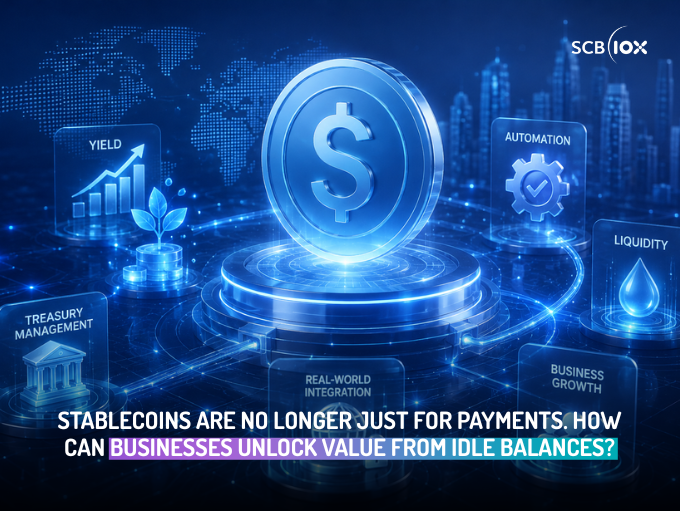
Treasury is emerging as one of the earliest operational functions to feel this pressure. Traditional cross-border payments require institutions to maintain pre-funded accounts across jurisdictions while waiting through T+1 or T+3 settlement cycles. Capital sits idle simply because payment infrastructure moves slowly. Stablecoins fundamentally change this equation.
Real-time settlement allows institutions to move liquidity continuously rather than according to banking schedules. Treasury teams can reduce trapped capital, improve liquidity management, and deploy funds only when needed.
Tokenized deposits extend this model inside regulated banking environments by preserving the characteristics of commercial bank money while enabling programmable movement across digital infrastructure.
Rather than competing directly, stablecoins and tokenized deposits increasingly appear to serve complementary roles. One connects banks to open financial networks. The other modernizes money within regulated institutional ecosystems.
For treasury teams, the strategic question is no longer whether digital money matters. It is how treasury operations should function when money itself moves twenty-four hours a day.
Wallets Are Becoming Enterprise Governance Systems
Institutional wallet infrastructure has also evolved far beyond secure key storage. As digital assets enter production, wallets increasingly become enterprise policy engines.
Financial institutions require infrastructure capable of enforcing role-based permissions, multi-party approvals, transaction limits, destination controls, audit trails, backup procedures, and recovery workflows. The operational complexity resembles enterprise identity management more than consumer crypto wallets.
As Eugene Kwok, Business Manager to Founder and CEO of QCP Group observed,
"Institutions do not allocate because they are excited. They allocate because they can explain the risk."
Risk management therefore becomes an adoption enabler rather than simply a compliance requirement.
Institutions need continuous visibility into smart contract exposure, validator behavior, protocol upgrades, custody arrangements, and operational controls before significant capital can move onto digital infrastructure.
The conversation is no longer about whether blockchain technology is secure. It is about whether institutional governance frameworks are mature enough to manage it.
The Real Bottleneck Is Internal Alignment
Perhaps the strongest message emerging across institutional discussions this year is that technology is no longer the primary constraint.
The bigger challenge is organizational coordination. Digital assets simultaneously affect treasury, payments, product development, legal, compliance, risk, operations, technology, and finance.
Each function sees a different opportunity—and a different source of risk.
- Treasury wants real-time liquidity.
- Product teams respond to growing client demand.
- Compliance focuses on regulatory obligations.
- Risk evaluates operational exposure.
- Technology must integrate entirely new infrastructure into decades-old banking systems.
Yet few institutions have an operating model that allows these groups to move together. As a result, projects frequently stall—not because the technology fails, but because no single governance structure exists to coordinate enterprise-wide adoption. This is increasingly becoming the defining challenge separating pilots from production.
Operational Readiness Will Define the Next Banking Cycle
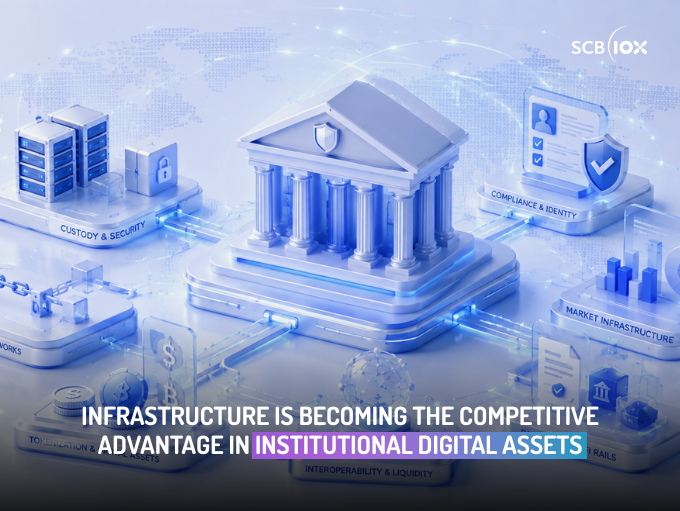
The next competitive advantage in banking will not come from announcing another blockchain initiative. It will come from rebuilding the internal operating model that allows digital assets to function safely inside large financial institutions.
Encouragingly, market readiness continues to grow. In Thailand, six market participants have already expressed interest in issuing tokenized mutual funds and tokenized bonds, reflecting a gradual shift from experimentation toward production.
The institutions that lead the next phase of digital finance will not necessarily be those that adopted digital assets first. They will be the ones that rebuilt their treasury operations, governance frameworks, wallet infrastructure, and organizational processes to operate across a real-time, multi-rail financial system. The next chapter of digital asset adoption is no longer about innovation. It is about institutional execution.
More full insights at https://youtube.com/playlist?list=PLJCrobWNqQvsuUikHX-4M9PEUpL5uxikm&si=s0kVnvgun68Z9VCZ
YOU MAY ALSO LIKE